Going Pro
This is for you if you are serious about running a sustainable business, but don’t have a customer acquisition and retention system in place.
You need to be a small business, startup, or entrepreneur who has some capital and would like to grow or scale your business or your business idea.
This email is about Going Pro. If you are struggling to survive, one of my other solutions may be better.
About being a Pro
The professional’s work ethic is their most often quoted characteristic.
“The professional is out there practising their shots. The amateur is in the clubhouse having beers with their mates,” is an image that often comes to mind.
Stephen Pressfield in his book, “The War of Art”, describes a professional as follows:
“ The difference between an amateur and a professional is in their habits. An amateur has amateur habits. A professional has professional habits. We can never free ourselves from habit. But we can replace bad habits with good ones.”
But there are two other sides of the professional, which are as important, that I would like to discuss.
I am a bit of a tennis fan. So I watch whenever I can.
At the time of wrting there was another battle between the old and the new guard in the past weekend.
Djokovic (36) took on Alcaraz (20) in the Cincinnati Open in an epic battle.
In the middle of the second set, we thought it was all over as Djokovic battled with the heat because of the temperature, which rose to 35 deg. Celsius (95 deg. Fahrenheit).
Djokovic had this to say:
"It's crazy, I don't know what I can say," said 23-time Grand Slam champion Djokovic, who was seen by the doctors early in the second set for heat illness in a battle that lasted three hours and 44 minutes. "It's tough to describe. It was the toughest I've ever played in my life.”
Being the seasoned Pro that he is, he battled through to win the match, despite all odds being against him.
This mindset and discipline is what the great Pros have.
After the match, Alcaraz had this to say:
"This match was really close, but I learned a lot from a champion like you. So congratulations to you and your team."
The secret could easily be missed. Did you get it?
Every professional has a great team behind them.
Even a solo sport like tennis needs a team to create a winner.
Yet so many small business owners choose to fly solo (even a pilot has a copilot).
Then there is another characteristic of a Pro that’s just as important.
Djokovic doesn’t simply pitch up every day and hit a few balls randomly on the court.
He has a system.
His system extends to his diet, his sleeping habits, his fitness regime and, of course, his craft.
Without the habits, the systems and the team, a professional would not be a professional.
Going Pro in your business is the same.
You have to pitch up every day to serve your customers.
You need systems for customer acquisition, customer retention and customer fulfilment.
You need people to help you, or else you will simply burn out and not be able to grow or scale.
A changing workforce
Luckily, with the social, economic and technological changes in the past few decades, getting people to help you has never been easier.
Plus, with the recent worldwide pandemic, we saw millions of people all over the world working remotely.
Many people also lost their jobs. One of my long-term contracts was terminated with two days notice.
This led to the growth of a new type of workforce that can work remotely for companies anywhere in the world. No office is required.
I have been working part-time, online and remotely for nearly a decade.
I am able to do this because many businesses don’t need my skills full-time.
So, even if I have a high asking rate, smaller companies can still afford me.
They get systems that run all the time, but they only pay a fraction for the people to set up and manage the systems. It’s a win-win arrangement.
I used to be an information systems manager at a large fashion retailer in South Africa, but since I haven’t been in the permanent job market for nearly a decade, I didn’t know what an Information Systems Manager earns today.
So, I Googled what Information System Managers earn in the USA.
Here is a screenshot of what I found on Glassdoor.
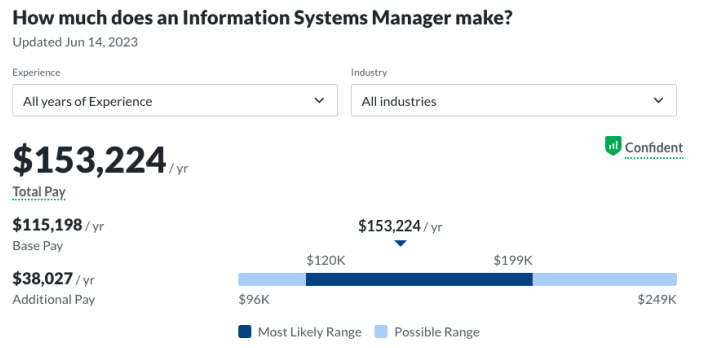
That is just for the management component of what I do.
I bring a lot more to the table.
There is no way a small business would be able to afford this.
But what if I could offer my services for less than the minimum wage of an individual?
I’ve come up with a solution that does exactly this.
I’m offering to set up and manage a customer acquisition and retention system that grows and scales with your business for a fixed monthly fee.
This is what’s possible.
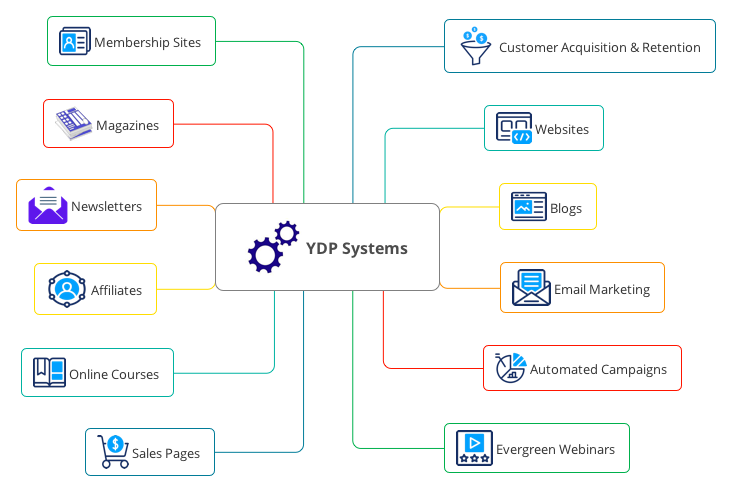
You choose your adventure.
Introducing…
A Managed Enterprise Customer Acquisition and Retention System for Small Businesses, Startups and Entrepreneurs for less than minimum wage.
I’m growing a small team and setting up my systems and processes so that I can take on more businesses in the future, but for now, it’s only for a select few.
I’ve thrown myself into CRM (Customer Relationship Marketing) Systems, even though I have a lot of experience in other systems.
The customer acquisition and retention system I’ve proposed was born out of my own fears.
I hate making outbound cold sales calls.
Speaking to a stranger on the phone, and trying to sell them something that they most likely don’t want is my biggest nightmare.
Don’t get me wrong. I love speaking to people, if they are interested in what I have to say, are willing and cooperative and want me to help them.
But going through a list of phone numbers and cold calling them… You would need to put a gun to my head!
So, a few years ago, when I heard Dean Jackson, on the “I Love Marketing” podcast, pose the question:
“What would you do if your phone could only take inbound calls?”
The penny dropped!
Since then, I’ve been using an inbound strategy by getting people to opt into my world.
I’ve done this for courses, coaching, system implementation, digital magazines and newsletters.
It’s all based on the same process that I taught you in my customer acquisition and retention strategy series.
I believe that this strategy can be used by (almost) any business.
But it’s best suited to businesses that have products or services that want to grow a loyal customer base.
A loyal customer is someone who buys many times from you.
A loyal customer also tells others about you.
A loyal customer will even defend you against your enemies.
The mechanism I am using is Email, as it’s such a rich medium, is slower and allows for a two-way conversation.
But you could also use text, SMS, Messenger or WhatsApp.
The way you communicate and the type of communication you send depends on the nature of your business.
Some commodity-type businesses have short sales cycles and some expensive or complex items or services have long sales cycles.
But the humble newsletter could be used for all types of businesses.
It’s more powerful than most people realise.
Just when I think it’s going to die, it makes a resurgence.
“Aside from cockroaches and Maroon 5's catalog, newsletters will be the only thing to survive (what seems like a more and more impending) nuclear catastrophe.” - Dave Pell
As email is such a rich medium, there isn’t one way to use it.
I am on some mailing lists that send me weekly specials and I am happy to receive them.
Another mailing list tells me about new products, which I look forward to.
Arnold Schwarzenegger’s Pump newsletter is surprisingly useful (and entertaining).
My market mentors send out educational emails that keep me informed and up to date.
The possibilities are endless.
This is what’s included in my Managed Enterprise Solution:
Set-Up
- Account Details
- Custom Domain
- Email Verification
- Payment Gateway
- Email Addresses
- Footer Settings
- Payment Pages
- Initial Tags
- Newsletter
- Blog
- Website
- School
- Lead Acquisition System
- Landing Page
- Opt-in Form
- Welcome Page
- Privacy Page
-Automated Welcome Email
- Automated Welcome Campaign
- Automated Sales Campaign
- Automation Tags
- Segmentation
Management
- Automated Tagging
- Organising List
- Pruning List
- Removing bounces
- Removing unsubscribes
- Monitoring Campaigns
- Subscriber Management
- Logging support tickets
- Following up on support tickets
- Campaign Management
Publishing
- Up to four posts across any channel
- Formatting of posts
- Scheduling posts
- Monitoring post performance
- Reporting on performance
- Create automations
- Create campaigns
These are just some of the tasks that came to mind, but it’s not limited to this.
All Information systems tasks related to set-up, management and publishing are included, whether listed or not.
This means that you can rest assured that your system will continue to run smoothly and that help is always at hand should something go wrong.
If you were to employ a full-time team to do this, it could cost you $10,000+ per month.
Luckily, Systeme has all the infrastructure and technical support we need, so we don’t have to employ engineers and technicians to handle the technical components.
I can therefore offer my services for less than the minimum wage in most developed countries.
For example, the current minimum wage in the USA is $7.25 per hour, which equates to $1,160 per month.
Most Western European countries have a minimum wage above $1,500.
In Australia, it’s over $2,000.
As I live in South Africa, where we have a weak currency, I am able to offer you a fully managed service that includes four posts across any channel for less than the minimum monthly wage of a single individual.
Here is what can be done:
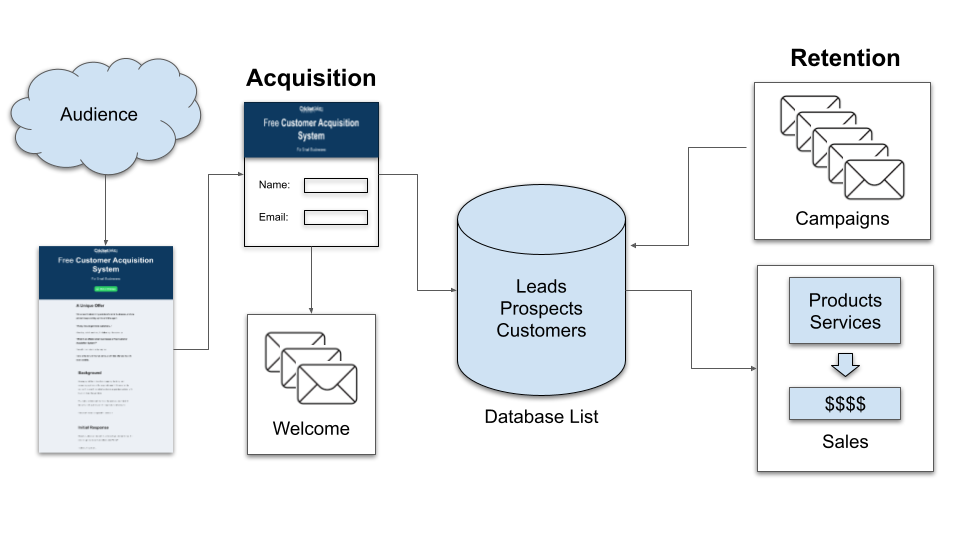
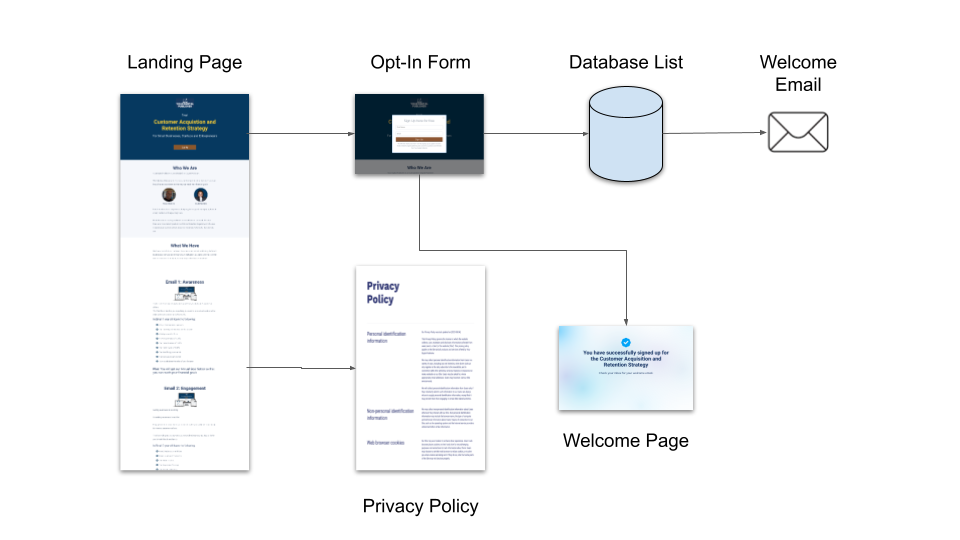
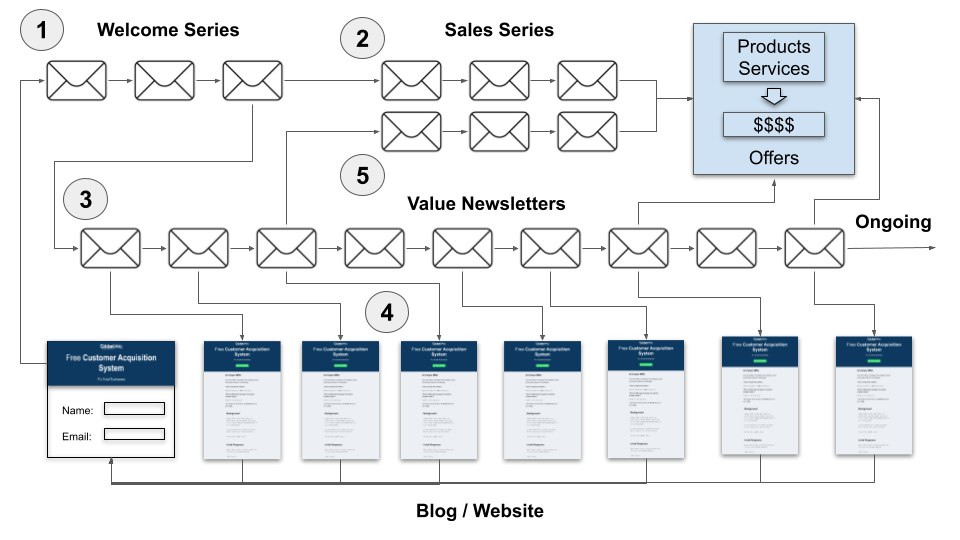
You can get the fully managed enterprise solution for only $450 (R6,750) per month and can start with the free Systeme plan.
You can sign up by clicking here.
But, if you have any questions about whether it will work for your business, just ask.
I’m ready to engage if you are.